This post looks at Artillery support within the Division and specifically at the composition of the Divisional Artillery Regiment, how the capability changed over the period and how it might be represented within games and scenarios.
The organic components of Divisional Artillery units were broadly consistent across both the MRD and TD however their detailed composition varied, these Artillery units included:
- Artillery Commander and his Staff
- Artillery Regiment
- Frog Battalion
- Anti Tank Battalion (not in TD)
- Artillery Battalions of subordinate MRR/TRR
Whilst in other armies air defence would be a component of the Artillery in the Soviet Ground Forces this was a separate arm of Service. The
Anti Tank Battalion's deployment and grouping have been considered in an earlier post and I'll leave the Frog Battalion for another day.
Equipment and Organisational Change
The composition of the Divisional Artillery Regiment and the amount of organic artillery available to the Division varied significantly over the period from the 1970s through to the end of the 1980s and whilst my focus is on the 1980s it's worth understanding this as it accounts for a variety of conflicting information presented across the various sources which can lead to confusion if the general pattern of transition is not understood.
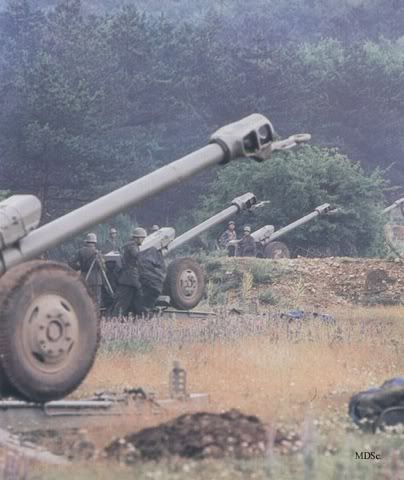
In the 1970's the MRD's Artillery Regiment comprised two battalions of towed
122mm D30 Howitzers and 1 battalion of towed
152mm D1/D20 guns, in a TD this was 3 Battalions of towed 122mm D30 guns. Each regiment included 3 Batteries of 6 Guns and most units used trucks as the gun tractors.
By The end of the Cold War units would have an Artillery Regiment equipped with self propelled guns, in MRD's this could include 3 battalions of 2S3, in TD's 2 battalions of 2S3 were more likely. In both cases batteries were of 8 guns and the regiments included an MLRS Battalion also of 3 batteries of 8 Launchers. The 8 gun and 8 launcher batteries seem to have been largely confined to
GSFG.
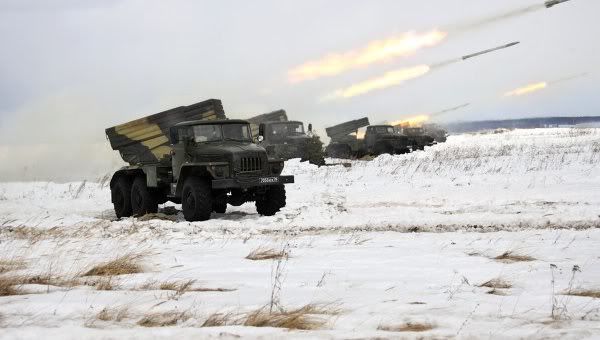
The MLRS units were incorporated into the divisional Artillery Regiments in the mid 70s and 2S1 and 2S3 started to be introduced to replace the towed guns and howitzers from around 1973. As individual Regiments transitioned from the D30/1/20 /MLRS mix through the introduction of initially a mix of 2S1 and 2S3 and then to all 2S3 units this created the conditions for a variety of Orbats to exist within the divisions of any particular Army or Front at a given point in time. The limiting factors on the transition and the principal cause of the variability being the rate of production and the sheer size of the Soviet ground forces, of note 2S3 production did not complete until 1993.
The broad roll out following acceptance in 1971 as outlined by
Zaloga was:
- From 1973 1 2S3 battalion to each MRD Artillery Regiment: A MRD could include 2 D30 battalions and 1 2S3 battalion
- From 1973 1 2S1Bn to each Cat 1 TD: A TD Could include 12S1 and 2 D30 battalion
- From mid 70s 1 122mm D30 battalion was replaced by 2S3 in TDs: TDs could include 1 2S1, 1D30 and 1 2S3 Bn
- Cat 1 MRD received 6 battalions of 2S1 two in the Artillery Regiment and 1 in each of the maneuver regiments: MRD Artillery Regiments could have a composition of 2 2S1 battalions and 1 D1/20 or 2S3 battalion. (this also rather defeats the view of BMP units having 2S1 battalions and BTR units having D30 equipped battalions)
- Cat 1 TD received 6 battalions of 2S1 taking them to 3 2S1 battalions or 2 2S1 and 1 2S3 battalion.
- Additional 2S3 battalions were deployed releasing 2S1 Battalions to the maneuver regiments
- All this did not happen as a simple sequence and the different policies and deployments interacted with each other unpredictably.
So what does this mean from the Wargames perspective, there were a lot of options, it was a big army, the role out did not complete before the economic impacts at the back end of the Cold war began to hit. You have a lot of choice, my late period Divisional Artillery Regiment has one 2S1 battalion and two 2S3 battalions. For operations the Soviet Army task organised units into Artillery Groups which introduced a lot more variation and are discussed further below.
The weapons thrown up by these changes were re used, initially they increased the Regimental artillery from a battery to a battalion and as towed assets in these units were replaced with Self propelled platforms then the size of Army and Front Artillery brigades were increased. The quantity of organic Artillery in the division including the regimental Artillery units therefore increased from a likely minimum 78 Guns in the 70's to a maximum 192 guns by the end of the Cold War.
The broad equipment change time line over the period with respect to Artillery equipment looks like this:
- 1963 D30
- 1966 PSNR 1 Ground Surveillance Radar
- 1971 2S3 entered production
- 1972 2S1 entered production
- 1973 first deliveries 2S1/2S3
- 1974 ACRV IV 12 Series Vehicles
- IV13 Battery fire direction centre,
- IV 14 Battery Command Vehicle with PN44 night sight and D11M-1 Laser range finder,
- IV15 Battalion Command vehicle with additional radios,
- IV16 battalion Fire Direction Centre with Field Artillery computer
- 1975 SNAR 10 Target detection and fire adjustment
- 1975 PRP 3 with PN 61 Image Intensifier, D11 Laser Range Finder, IV 520 Fire Control , Computer, dismountable D13 LRF (I think this came later), RL 126 ground surveillance radar
- 1975 2S3M upgraded loader increased rate of fire
- 1976 PSNR-5
- Late 70s DK-1 Dismountable LRF Sage Gloss at Regiment and Division
- 1980's 9M28 Rocket Grad P (Airburst)
- 1980 PRP 4 as PRP3 but with PN 71 Thermal Imager a D14 LRF and PSNR -5 ground Surviellance radar
- 1983 ACRV upgrade
- 1986 152mm PGM 2K25 Krasnopol complex deployed by 2S3. The 122mm Kitalov 2 complex was a post Cold War system deployed in 2002
- 1987 2S3M1 Gunsight and data terminal to receive display command information from IV 13
- 1988 PRP 4M
So not dissimilar to Western developments with the principal areas of change being:
- The Introduction of Self Propelled Guns.
- The Introduction of dedicated Command and Observation Post vehicles specifically equipped for role.
- The development, deployment and improvement of target acquisition systems including radars, lasers, and night observation systems.
- The development, deployment and improvement conventional munitions to include PGMs and sub munitions.
- The development and deployment of data systems for processing and passage of command and fire control data.
A wide range of munitions were available for both 122mm and 152 gun systems for the 2S3 these included:
- OF-540 HE
- OF-25 HE Frag
- BP-540 HEAT-FS
- Br-540B AP-T
- OF-38 Krasnopol Laser Guided
- S1 Illuminating
- ZH3 Smoke
- and Nuclear Warheads with a 2kt yeild
The impact of all these changes were quite considerable in terms of the effectiveness of Soviet Artillery the impacts included;
- Increased protection of the gun crews,
- More rapid displacement between fire positions,
- Reduced time into and out of action,
- Improved target acquisition
- Increased range, of munitions and target acquisition capability
- Reduced time to resolve targets at greater ranges
- Increased speed of transmission of artillery data reducing engagement times and data errors.
- Increased speed of processing fire missions, through use of fire control computers
- Improved Lethality, both through munitions developments higher rates of fire and the increase in size of the fire unit from battery to battalion.
These increases in the scale efficiency and overall destructiveness of Soviet Artillery over the period and acted as a significant counter to NATO proliferation of handheld anti tank weapons and enabled the Soviet Army to reduce its doctrinal dependence on nuclear weapon use.
The Divisional Artillery RegimentThe Organisation of the Divisional Artillery Regiment is outlined in the diagrams below, TD's would generally only deploy two battalions of 2S3. Both Isbey and FM 100-2-3 contain detail on the composition of the various Sub Units.
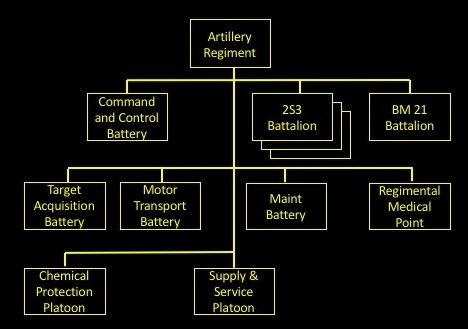
From a Wargames perspective the main elements that we might want to represent will be rules dependent, from my point of view these are:
- Command and Control Battery
- 2S3 Battalions
- BM 21 Battalion
- Target Acquisition Battery
- Regimental Aid Point
The gun battalions and BM 21 battalions are broadly similar organisation and include:
For my games I use a vehicle scale of 3:1 so I represent the battalion as 3 batteries with each battery containing:
- A supply truck, either a Zil 131 or a URAL 4275,
- A command vehicle either an IV 12 Series COP/FDC (2 batterys per battalion) or a BTR 60 PU radio vehicle (1 battery per battalion and effectively representing the Battalion HQ).
- 2 firing platforms 2S1/2S3 or MLRS depending on the unit type.
From the battalion I deploy two OPs using the ACRVs as theoretically this organisation could generate seven OPs if required:
- 4 from the COPs (IV13/15)
- 1 from the PRP
- 2 additional flanking OPs which would be created on an Ad Hoc basis from battery staff and vehicles.
The Regimental Command and Control Battery
A BTR 60 Command Wagon represents the 3 ACVs admittedly 2 are MTLBus but I have a lot of them in the unit already. Other than that I have added 1 UAZ 469 and 1 Gaz 66. I also included a PRP 3 which might seem a bit strange.
One of the things I wanted to resolve within the HQ was the representation of PRP 3. Because of the way the PRPs are distributed with three sitting in the Regimental Artillery battalions (one each) and three in the divisional Artillery battalions (one each) and one in the Target Acquisition Battery. You end up with no representation of the vehicle due to the 3:1 vehicle scale, which is a shame as its a good looking wagon. Technically two would be deployed within the division (at 3:1) to accommodate this I added one to the Regimental HQ and one to the Target Acquisition Battery
The Target Acquisition Battery
It's a bit of a challenge to work out what's going on here and with this organisation having components that would sit in the off board force and the onboard force it needs to be divided up. This is how I viewed it;
- Recce Platoon @ 2 BTR 60/70/80 + 2 LRF - represented by 1 BTR 60
- Comms Platoon @ 1 UAZ 452 Compute, 3 UAZ 469, 3 Gaz 66 - 1 UAZ 469, 1 Gaz 66
- Surveillance Radar Platoon @ 1 SNAR 10, 1 PRP3, 1 Counter Mortar Radar - represented by 1 SNAR 10, 1 PRP 3 (see above for explanation). The SNAR 10 would normally be deployed along side Artillery COPs.
- Sound Ranging Platoon @ 4 Gaz Vans, This example of the 1B19 Complex provides a view - 1 Van
- Topo Survey Platoon - not represented
- Met Survey Platoon - not Represented
- Radar Platoon - 3 radar direction finder, 3 Gaz 66 - 1 Gaz 66 and a PSNR -1 or 5
So In Summary 1 BTR 60 ACV, 1 UAZ 469 & Gaz 66, 1 SNAR 10, 1 GAZ VAN, 1 GAZ 66 + Radar. I have found no source data that attributes the number of vehicles to the platoons within the Target Acquisition Battery so have applied some thought and generated the answer. If anyone knows of better data on this I would be grateful for any pointers as to a more accurate representation.
FM 100-3-2 covers the Regimental Medical Point under the MRR and I have assumed its the same for all regiments. The core of this is a treatment section and one or two collection sections. I assume of the four Ambulances available three are in the collection section and one in the treatment section and the other sections all collocate with the treatment section. I have gone for a three vehicle representation of a Gaz 66 for the Treatment section and 1 UAZ 452 for each collection section.
Krasnopol
Krasnopol was a Precision Guided Munition(PGM) for 152mm Artillery pieces deployed in the late 80s. PGM's effectively allowed artillery firing in the indirect fire role to engage point targets such as vehicles or field defences. This was achieved through laser target marking and steerable control surfaces on the projectile allowing for in flight course correction. The amount of correction possible was limited so the round had to be lobbed into the right space relative to the target and the observer for the whole thing to work. Rounds were provided for all the major 152mm systems in Soviet service. The complex consisted of the OF 39 projectile and a D15 Laser Target Designator together with a couple of command devices one for the gun line and 1 for the OP.
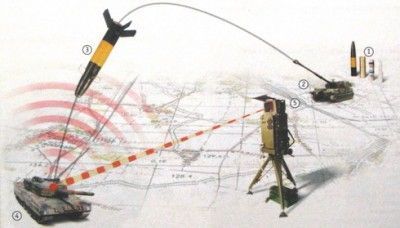
Getting the round in the right place at the right time from the right direction to acquire the illuminated target was critical to success, as was the need to limit the time the target had to react. All this required a degree of thought to be applied to the process, as such engagement zones needed to be recced and engagements planned. This required a degree of preparation of the target zone and the gun line which would improve hit probability and reduce the effectiveness of any target counter measures. Clearly more Ad Hoc engagement would lead to a lower probability of hit.
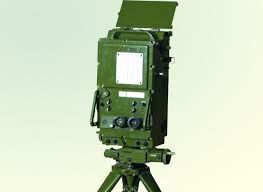
Krasnopol was allocated in sets, each set included;
- 50 Rounds
- The shot synchronization system
- The LTD.
A battalion might be allocated 4 sets for a total of 200 rounds. Common practice seemed to allocate one battery as the Krasnopol Battery and one platoon within that battery as the Krasnopol Platoon . This platoon would carry 140 of the 200 rounds with the remainder being spread across the rest of the battalion. One LTD would go to each Battery COP and 1 to the Battalions mobile reconnaissance post (PRP 3).
In order to engage the OP had to position between the target and the gun line within a 15 degree arc and within 7kms of the target. Rounds would be fired in succession into the target area either on command of the OP or every 30 seconds.
Krasnopol seems like very useful addition to the indirect fire inventory of the Divisional Artillery Regiment and one which makes the deployment of the related COPs a consideration from both a task organisation perspective and enabling targets to be engaged. I can think of a number of scenarios where It would be interesting to explore the impact of this such as the deployment of the Anti Armour Reserve at divisional or regimental level and the deployment of the Advance Guard.
Artillery Groups and Control of Fires and Units
With the Artillery assets at its disposal the division artillery staff would form a Divisional Artillery Group (DAG) and a number of Regimental Artillery groups (RAG). The Division would be allocated assets from Army and Front and allocate assets to its subordinate Regiments enhancing the organic capability.
RAGs would generally only be composed for the units in the first echelon. The implication from the Xenophon lessons on Divisional Artillery is that all the divisions artillery assets would be allocated between the DAG and the first echelon RAGs. RAGs for the 2nd echelon units would be composed prior to that echelon being committed effectively being withdrawn from the first. The staff planning data for these add hoc groups were:
- DAG 4-6 Units
- RAGs 3-4 Units (For lead Echelons only)
Clearly these would be impacted by the priority of the axis of advance (main or secondary) and the type of operation, advance, breakthrough or pursuit.
Battalions would be allocated fire units from RAG as required this would generally be when acting as an advanced Guard, Forward detachment or for an assault. The composition and distribution of non organic assets has been covered in earlier posts on the
MRR and
Non Divisional Artillery Units which contain examples of such groupings and provide a view on the range of units from which these elements might be drawn.
In addition reinforcing fire from the Army Artillery Group and the Front Artillery Group could be superimposed by the higher headquarters as it saw fit or as part of a fire plan.
Groupings and hence control of the Artillery units would change with the different phases of the Plan. In general the DAG would retain control in the preparatory fire phase, then resources and control would shift to the RAGs for the Assault phases before being transferred to the 2nd Echelon as they were committed. Fire Units Ammunition and Time slots could all be held in reserve.
I aim to explore this further in a TTP post about the deployment and use of divisional artillery after I have digested some more of the data in the Xenophon archive.
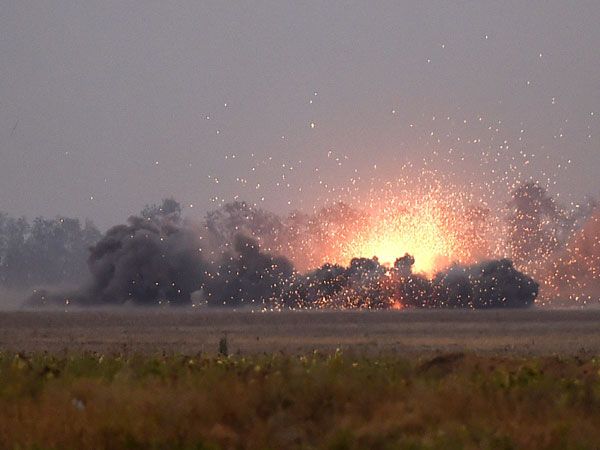 Wargames Representation
Whilst the Divisional Artillery Regiment does not easily lend itself to most peoples idea of a 20mm table top action there are a number of ways its assets can be included in games, although I do admit that you have to try hard. There are a number of mechanisms which allow exploration of their use and role, these include;
- Direct incorporation into the onboard elements as a focus of the scenario an example might be penetration of NATO forces into the depth of the divisional defence where Reserves and Artillery elements might be the core components of the Soviet Force. Such games can be built as stand alone scenarios or be components of a mini campaign.
- Representation as off board support providing the Divisional wrap of supporting fires and Air Defence, in this instance the elements needing to be represented would be limited to on board Target Acquisition components.
- Representation on subsidiary boards enabling aspects of the depth fire battle to play out using Air, Artillery, Air Defence and follow on Maneuver assets as part of a larger game. Personally I like this approach and a variety of additional commands can be generated around the Artillery, Air and Air Defence aspects allowing examination of both deep and rear operations, both of which had significant impact on the outcome of the engagement being fought. Without additional players the scope is more limited as there is a significant amount of thinking needed and additional game mechanics to play through that would otherwise consume too much time.
- Linked Games, pre game play and mini campaigns offer approaches to resolving the issues outlined in the subsidiary board approach and if the number of players are limited offer a way to explore elements of Deep and Rear opps. The detail of the sequencing of the games then becomes the major challenge.
- Smaller Scale, heresy so not considered further :). Not my particular poison but alternative scales 1:300/600/700 offer the opportunity to develop these aspects in a more manageable space both from a cost and storage perspective, my problem is I am far to in love with the joys of 20mm to go there.
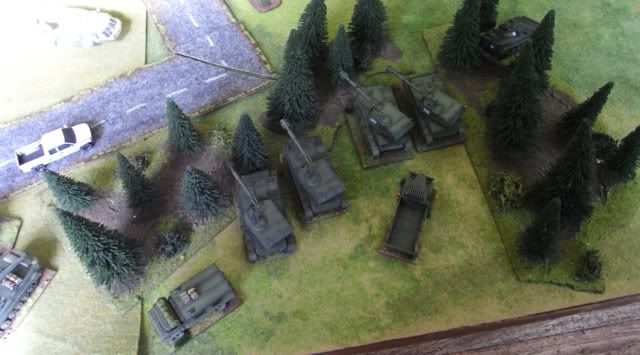
What gets represented and how the support is applied is a key component of designing the scenario and something for the TTP post and some scenario ideas I have been working on. Both the Big games covered on the blog the
Wisenberg Counterattack and
Storming the Weidhouse Gap contained significant artillery components.
Models and Availability
Having identified that you want to build something as challenging as an Artillery Regiment and you have managed to convince your self that it will get the odd outing. Sourcing the models isn't always easy, the table below outlines a range of suppliers for the vehicles required to represent in whole or part the Divisional Artillery Regiment.
Whilst the coverage of the vehicle fleet is fairly complete now with the release of conversion sets by S&S for the BTR series vehicles some of the ground equipments will require scratchbuilding if they are to be represented, notable ones include:
- Counter Battery Radars
- D15 Laser Target Designator
- DK-1 Laser Range Finder (Imagery of this is proving a challenge to find)
where I have already written a review of the relevant models they can be found here:
References:
Books:
Internet:
Other Posts of Interest


 are on deals at eShop!
 and the like, you'll love this too. Albeit, a mario version. I must say, I really like the gameplay. And, the weapons are super cool. Remind me of the halo guns. I'll rather they have a real enemies instead of the crazy rabbids though.


 are the best portable gaming console!


